Cambridge Associates • 2025
Overhaul of design system & optimization of internal tooling

Role
UX Design Intern
Timeline
3 Months
Skills
Design System
Prototyping
User Interviews
Team
1 Senior PM
2 Designers
Overview
What is Cambridge Associates?
CA is a global investment firm founded in 1973 that provides investment advisory and portfolio management services to institutional investors including endowments, foundations, pension plans, and private clients. With offices worldwide, the firm manages custom investment portfolios for over 850 clients globally.
2 problems needed to be solved

Design System
3 different design systems across their internal, investment, and customer-facing platforms. My objective was to find a way to merge them to one unifiaaaaaaaaaaaaaaaed system.

IPS Platform
Investment documents were being manually inputted and followed no structure . My goal was to design a system that formalized and automated the process.
Impact
$276B+
AUM handled through redesigned platforms
700+
components and variants designed and documented
1400+
employees using newly designed system
Project #1
Design System Overhaul
Problems
Design Differences
Jumps between 3 different design systems caused poor representation of the company and confusion among new products.
Outdated Figma architecture
Early transition from Adobe left files using legacy features, lacking modern Figma capabilities (auto-layout, variants, etc.)
Poor documentation
Developers struggled to implement designs without clear specifications, slowing handoff and causing inconsistencies
Accessibility gaps
Inconsistent font sizes and color combinations failed to meet accessibility standards (WCAG)
Solution Preview

New component + documentation
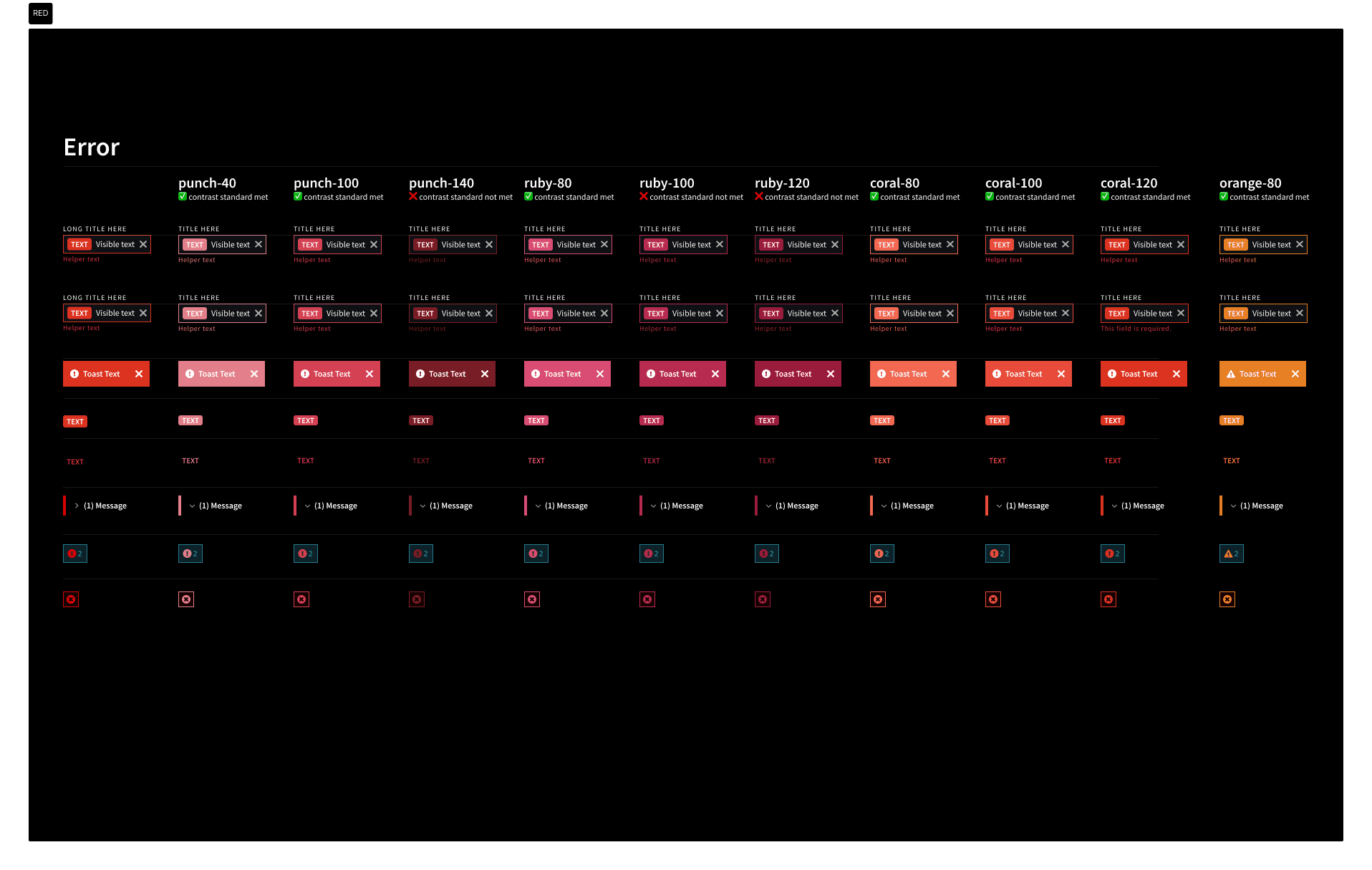
New error color for accessibility
Process
3-step Process
Understand
Audited usage across platforms
Gathered designer/dev requirements
Set sizing, spacing, accessibility specs


Build
Built variants in Figma
Wrote usage guidelines
Establish new variables
Ship
Reviewed with senior UX
Shipped to shared library
Delivered specs & tokens

Showcase
Published components in official Figma file
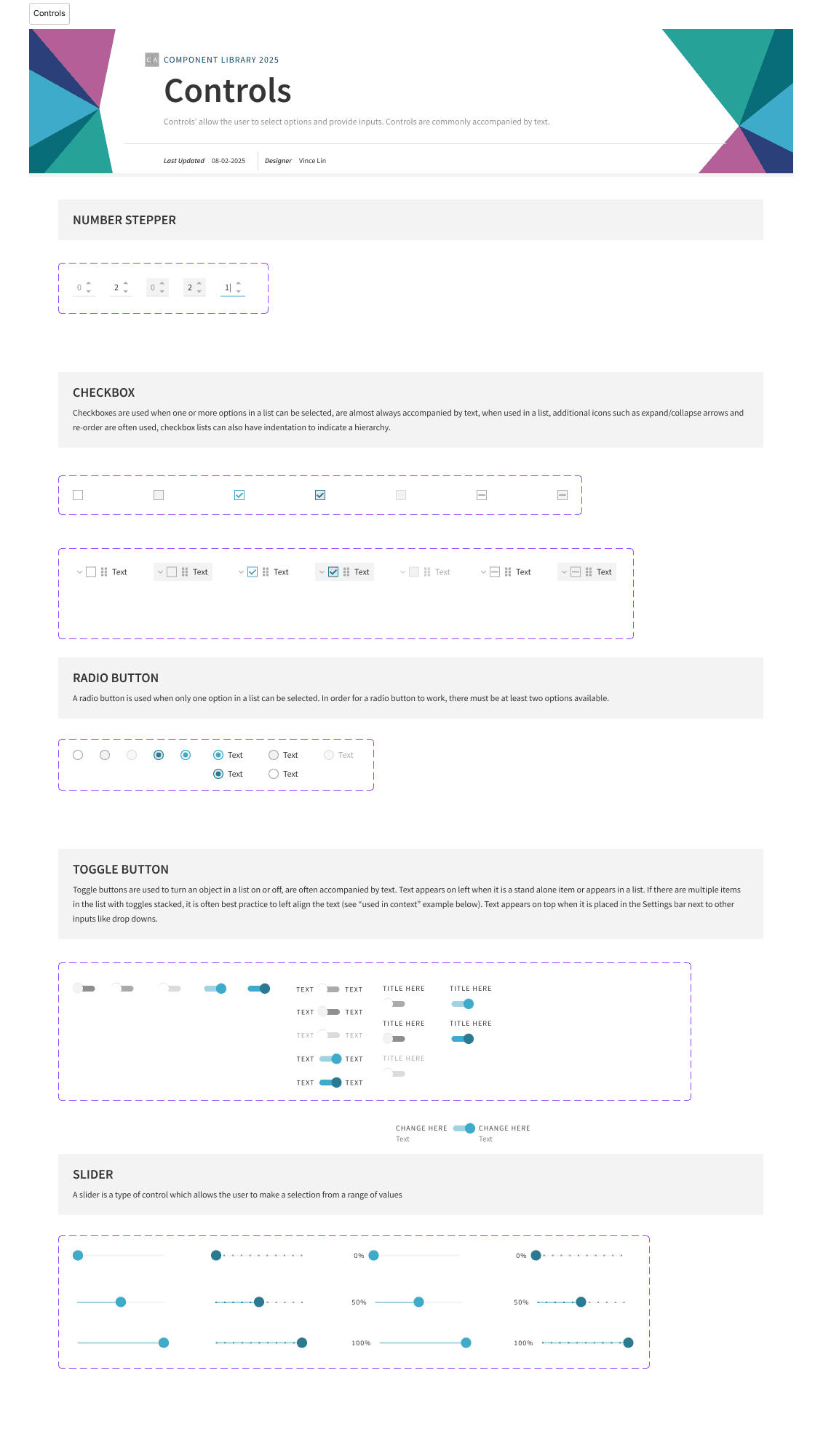
Badges component documentation
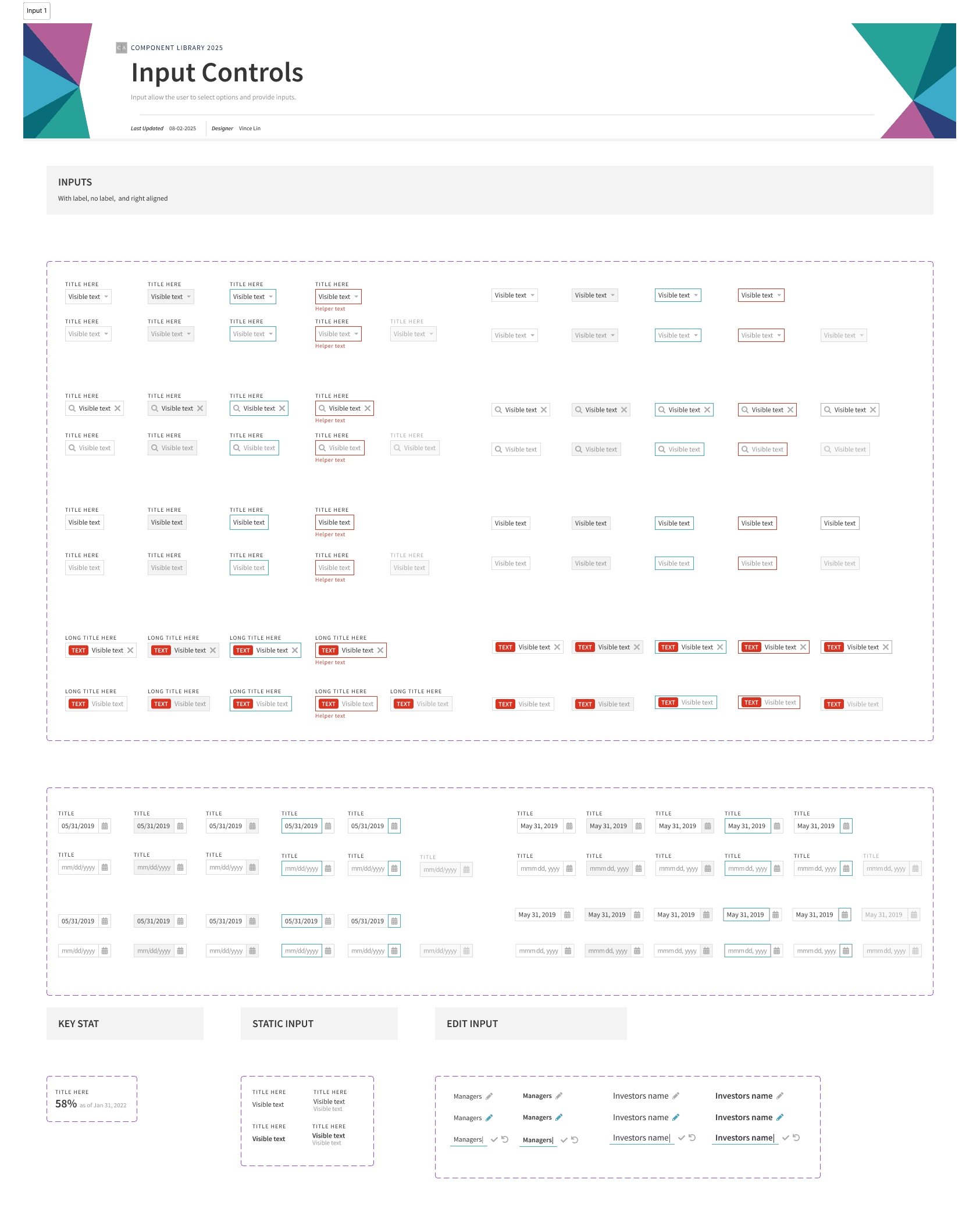
Badges component documentation
Prototype
Use of new components in real products*
*Information has been cleaned to adhere to NDA*
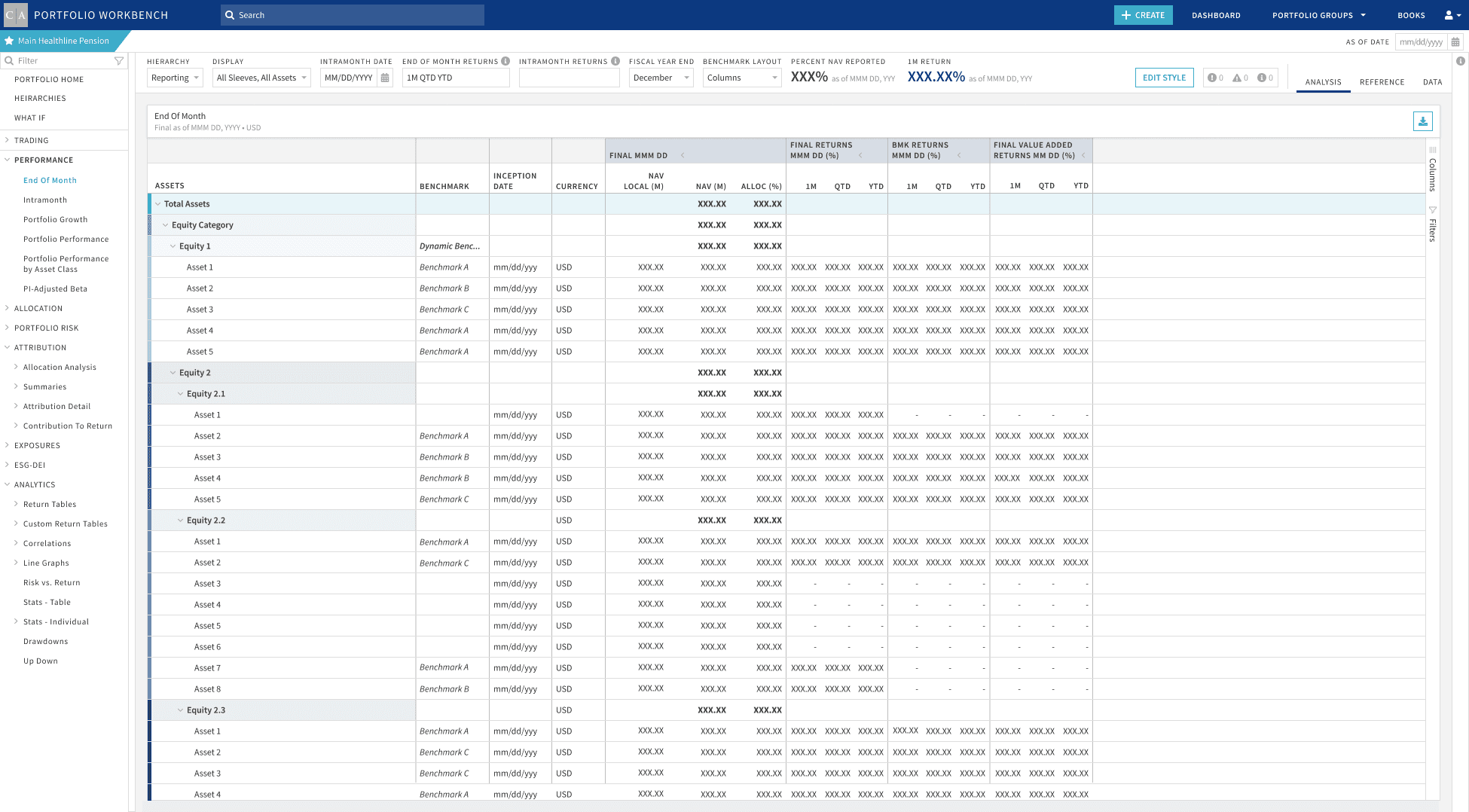
Main portfolio management platform (default variant for components)
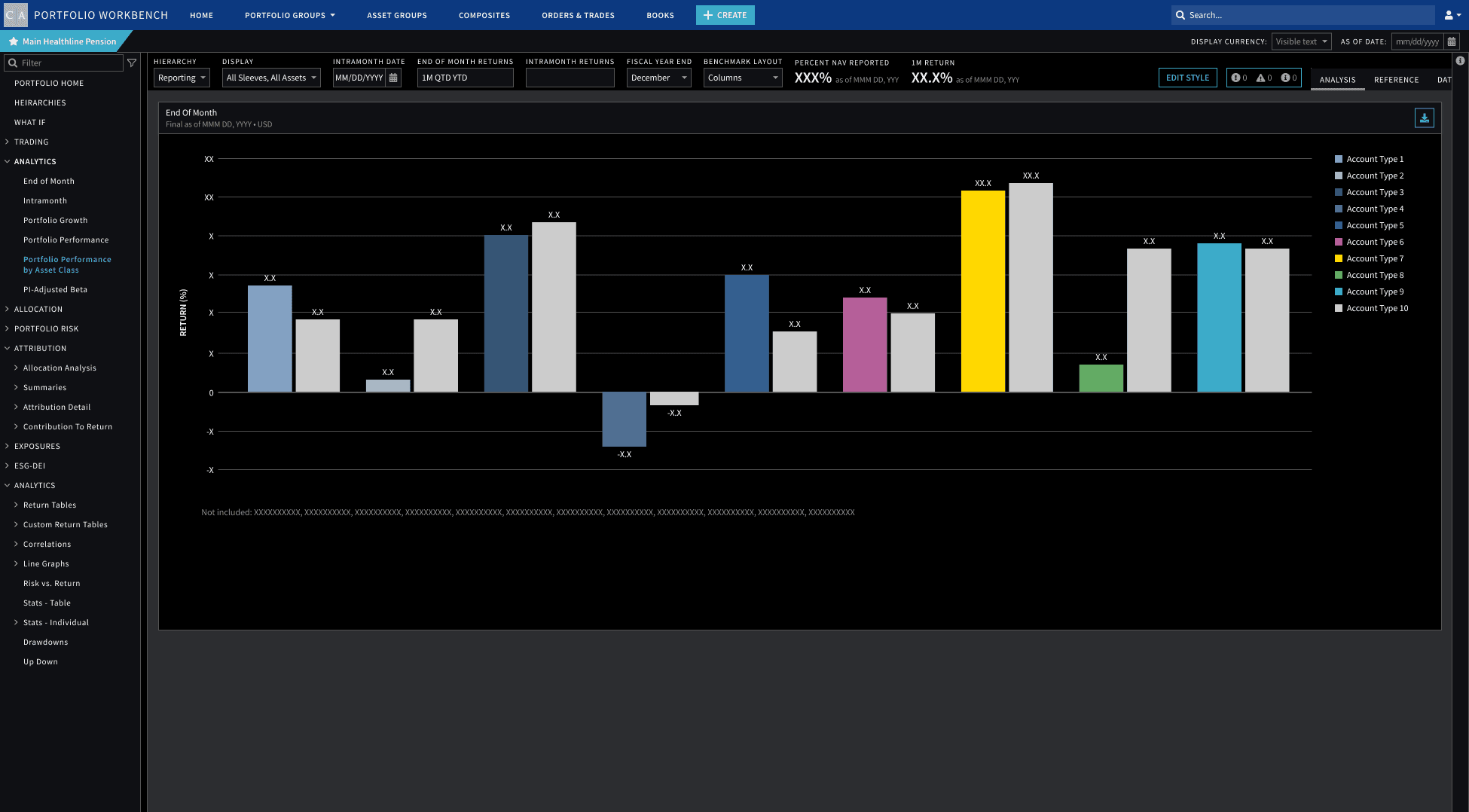
Portfolio management chart view (Showcase of dark mode component variants)
Reflection
Key Takeaways
Details matter
This project showed how pixels can have effects on a product as multiple errors can compound and if not fully communicated to engineering, can result in the final product not looking like the design.
Slow is fast
When I initially started I tried to speed through components which would results in a lot of mistakes. I would have to go back to redo it and end up using more time than if I had done it slowly but correctly.
Project #2
IPS* Platform
*Investment Policy Statements are documents that outline a client's investment objectives, constraints, and guidelines. A VERY critical document for portfolio management.
Problems
Manual Work Eating Time
Investors, analysts, and compliance had to manually transcribed IPS information into spreadsheets into database which took too much time as client base grew.
Errors + Inconsistencies
Due to the manual nature of input, human errors and inconsistencies were frequent as everyone had their own workflow.
Solution Preview
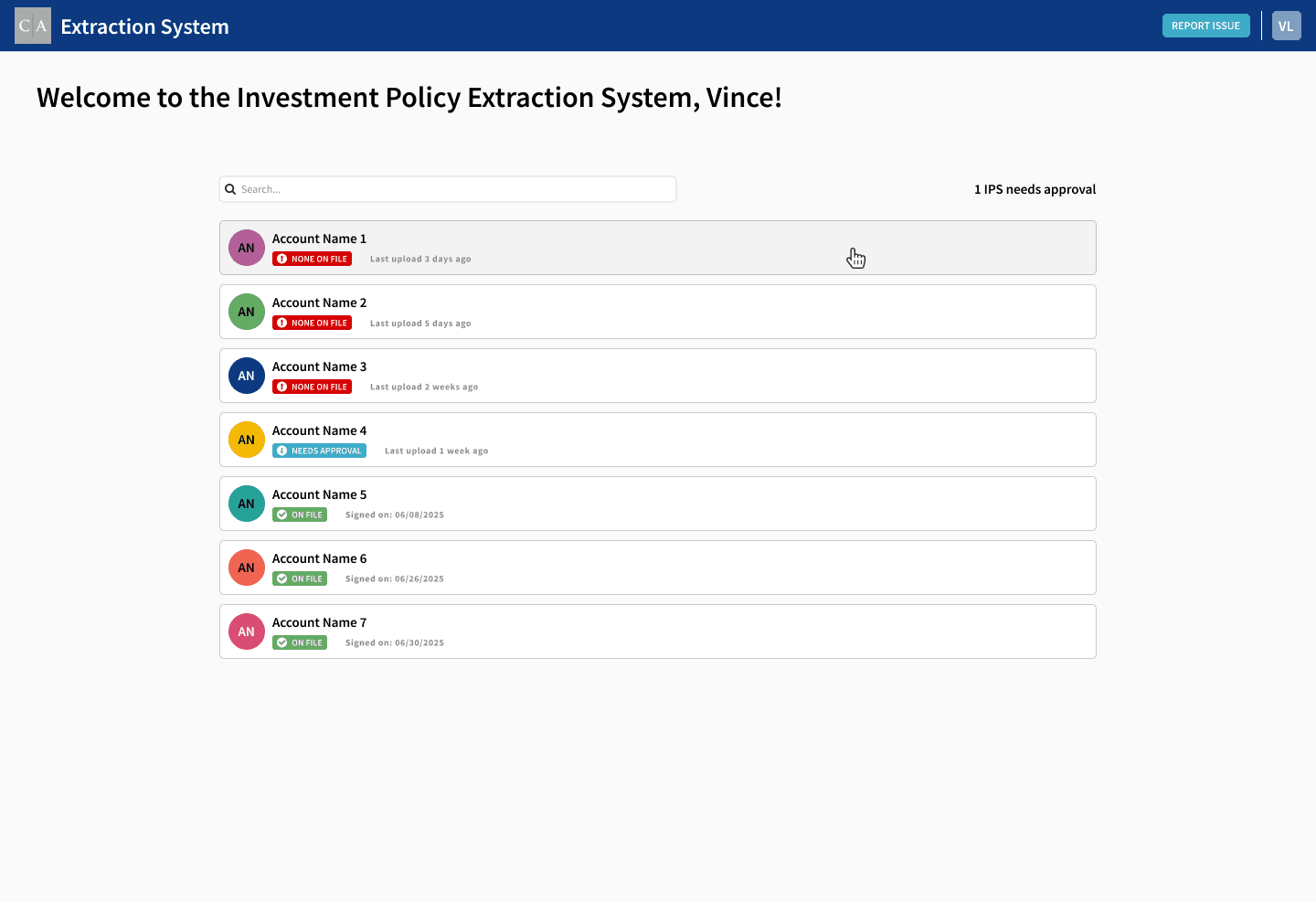
All-in-one tool to consistently access data
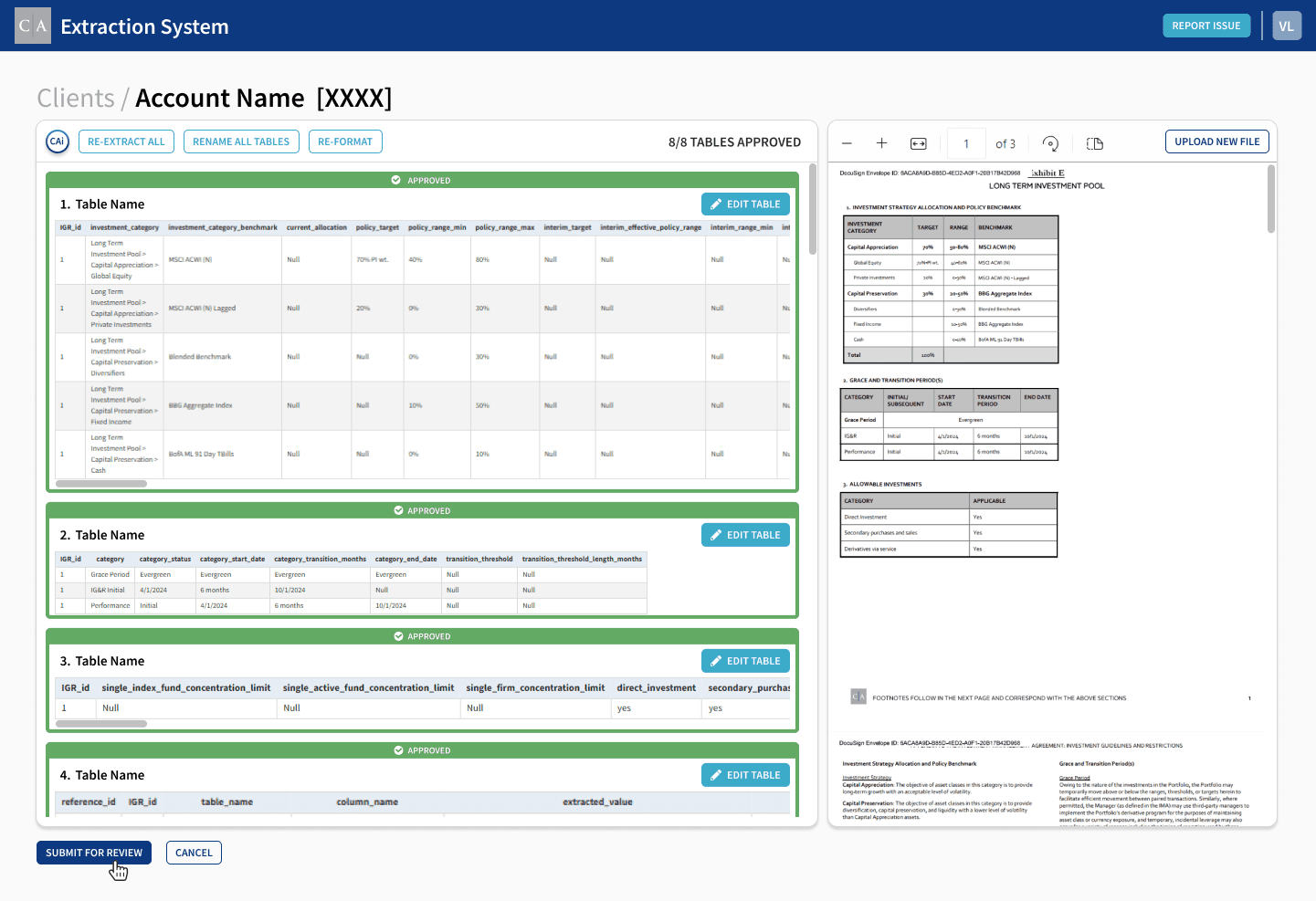
AI-assisted data parsing to reduce manual work
Research
Observe current workflows and research new tools
I sat down with analysts to understand their workflows and pain points that came with their current manual process. This uncovered inefficiency points which were documented as error patters and bottlenecks. We then explored technical tools such as LLMs and the current database structure to see how they could be integrated.

ChatGPT enterprise was picked as the safest and cost effective solution
Users
Primary Users & Use Cases
Analysts & Investors
Input and review IPS data, manage client information
Compliance Officers
Verify accuracy and approve entries before database upload
User Needs

Solution
AI-Powered Processing Platform
Document Upload & AI Parsing
Upload IPS documents; AI extracts key information and presents for review
Review & Validation Workflow
Analysts verify AI-extracted data and make corrections
Compliance Approval & Database Flow
Submitted entries route to compliance officers for review; can approve or send back with feedback. Approved entries automatically upload to internal database
Spreadsheet-Style Interface
Familiar data manipulation tools (sorting, filtering, formulas) to reduce training time
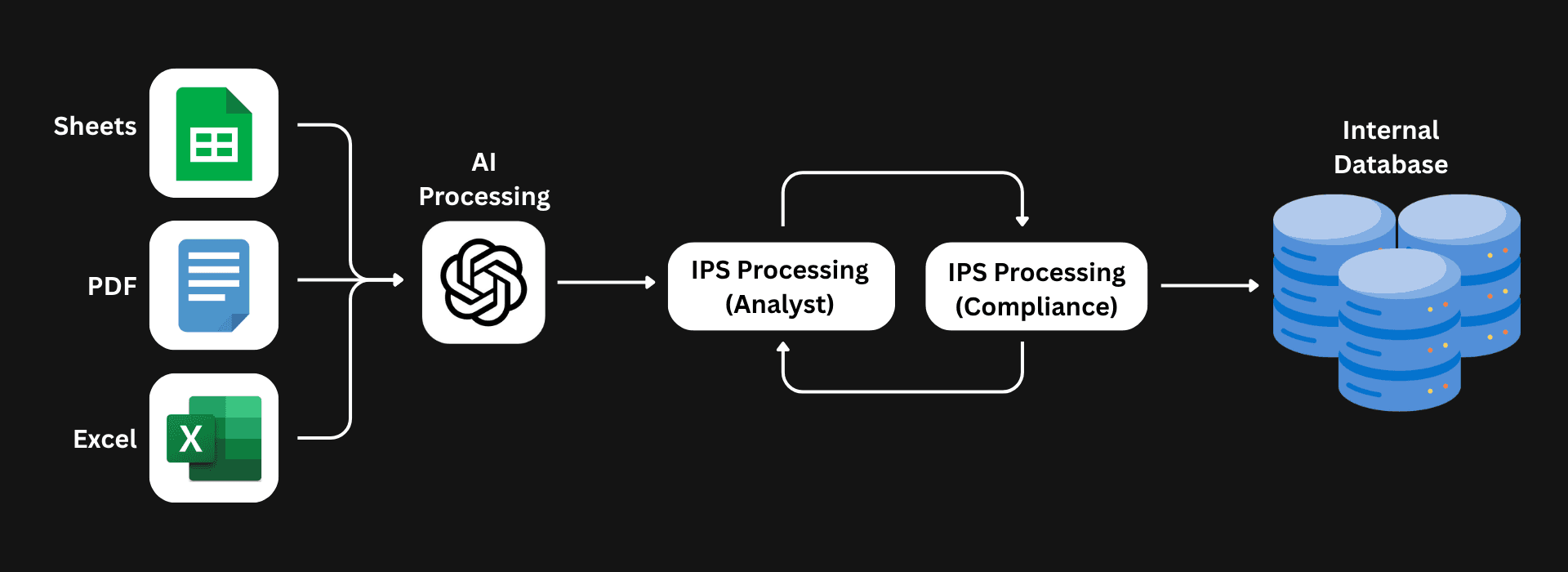
Technical Implemntation
Prototype
Screens from full design

Main Login Screen
Landing Page of all accessible clients
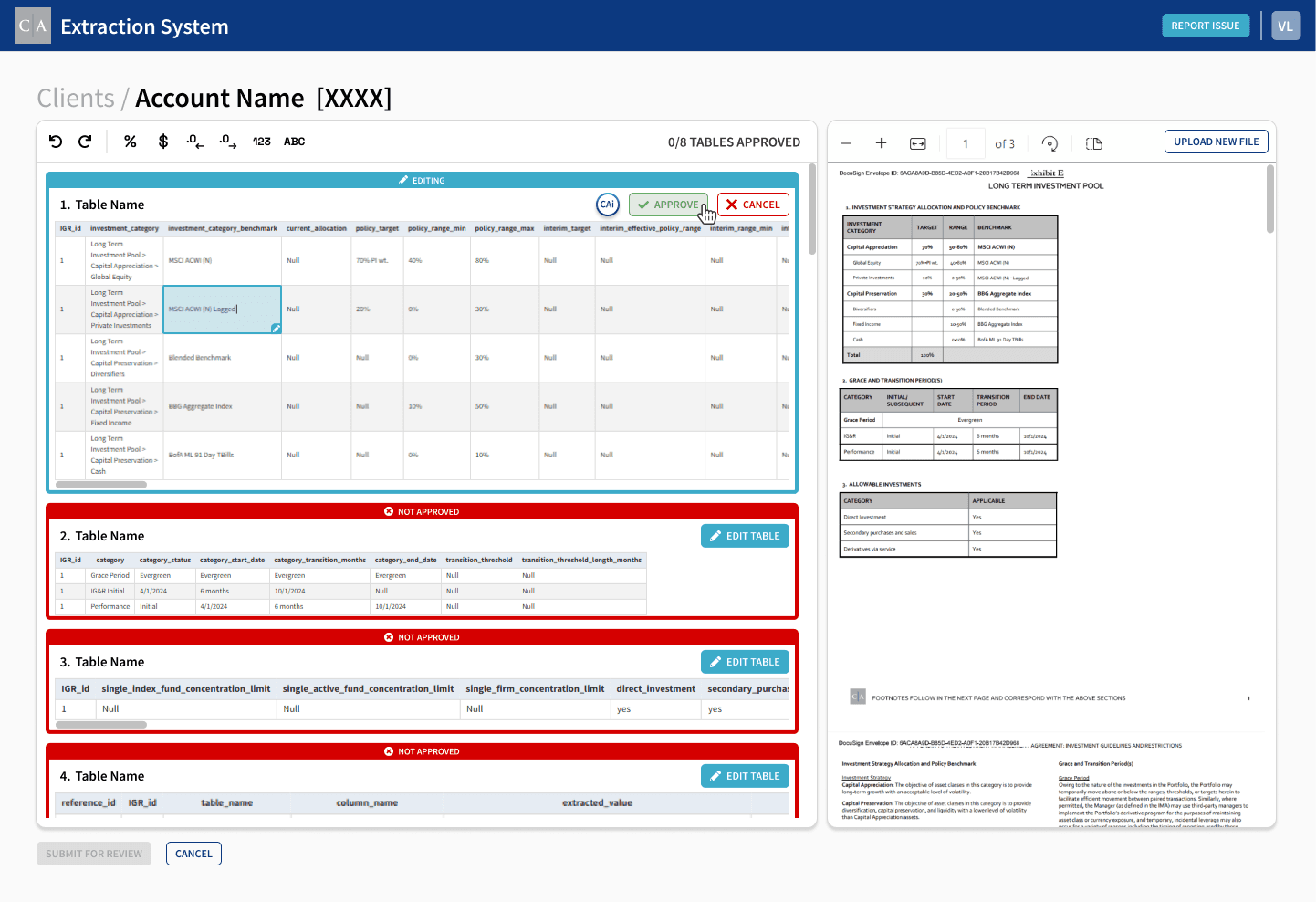
Uploaded view of IPS document
Approved all tables from IPS
Reflection
Key Takeaways
Learn from users
The best way to do research is to sit down with users and actually watch them perform their pain point. Talk to them and empathizing is one thing but taking time to witness their struggles is another thing.
Familiarity is king
Users are most comfortable using products they recognize. For this product, don't over-design the spreadsheet editing and copy what current designs are like as that is what users are most familar with.